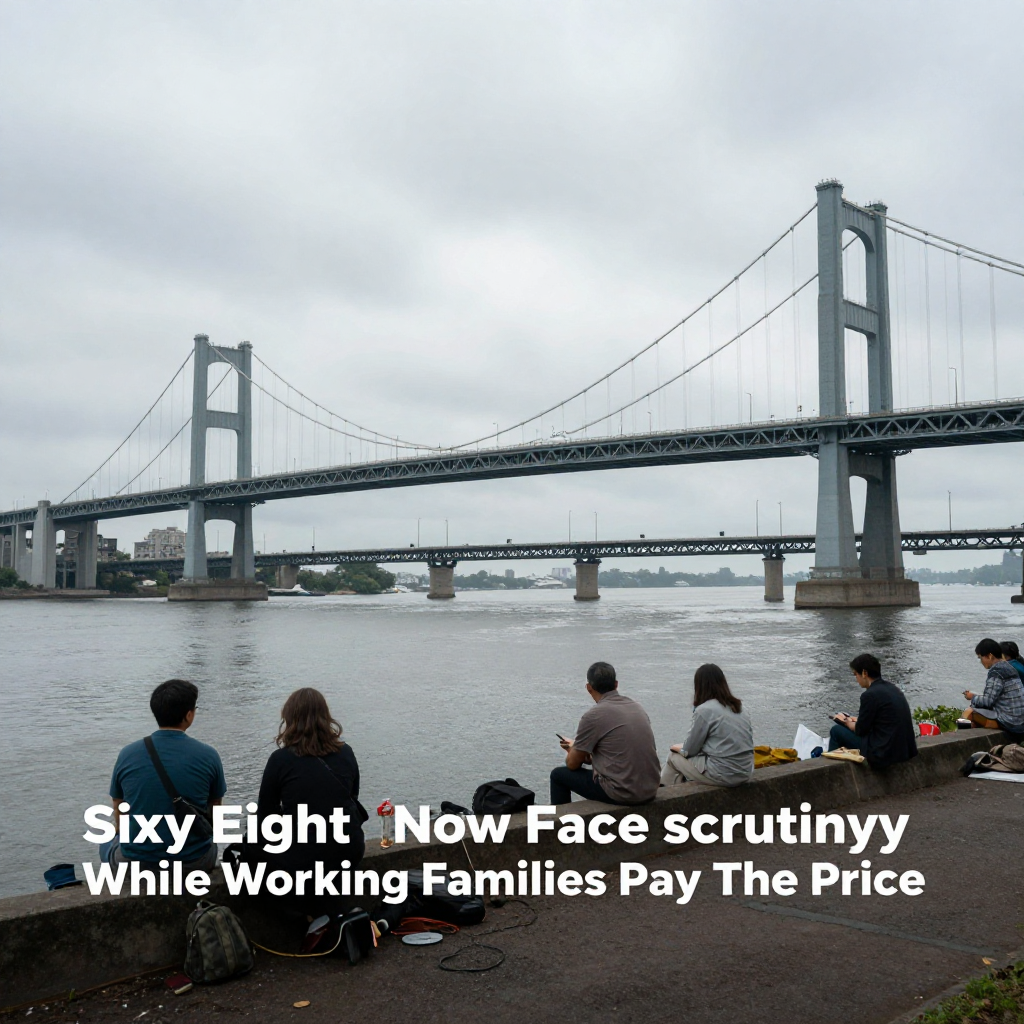
Sixty eight bridges across the country now require urgent safety assessments after investigators determined they could buckle if struck by a cargo vessel. That number comes exactly one year after the Francis Scott Key Bridge in Baltimore crumbled into the Patapsco River, taking six construction workers with it. The National Transportation Safety Board flagged these structures as potential death traps, but the warning arrives long after families started paying for delayed repairs with their time, their commutes, and their wallets.
The collapse exposed a national pattern that stretches far beyond Maryland. Thousands of aging spans sit in poor condition while local governments wait for federal dollars that never seem to arrive. At the same time, the American economy has settled into a quiet freeze. Hiring has dropped to recession levels even though unemployment stays artificially low, creating a job market where companies hold onto their current staff while refusing to bring anyone new on. Housing costs continue to climb, and most families are just trying to keep their heads above water while watching critical infrastructure rot.
Working Americans feel the weight of this neglect every single morning. A closed bridge means a twenty mile detour that burns extra gas, wears down tires, and eats into already stretched grocery budgets. Freight delays push up the price of everything from lumber to canned beans, hitting the checkout counter long before the politicians in Washington finish their budget debates. Meanwhile, the companies that profit from cheap maintenance and overseas labor walk away with civil settlements. Grace Ocean and Synergy Marine agreed to pay a hundred two million dollars to resolve negligence claims, a fraction of the actual cost to the families who lost their livelihoods.
This is not just about cracked concrete or missed inspections. It is about who carries the risk when systems fail. The current job market offers no safety net for workers who get caught in the crossfire of corporate caution. People are draining retirement accounts and leaning on dwindling savings just to cover rent while employers sit on their hands. When a ship loses power and slams into a support column, or when a rusted overpass finally gives way, the people who clean up the debris and rebuild the roads are the same ones getting priced out of their own neighborhoods.
We cannot keep treating public safety and economic stability as separate problems to solve at a later date. The next cargo vessel will not wait for a congressional spending bill, and the next paycheck will not stretch further while infrastructure crumbles. If we keep asking working families to absorb the cost of corporate shortcuts and political gridlock, how long before the next collapse takes more than just a commute?.
Leave a Reply