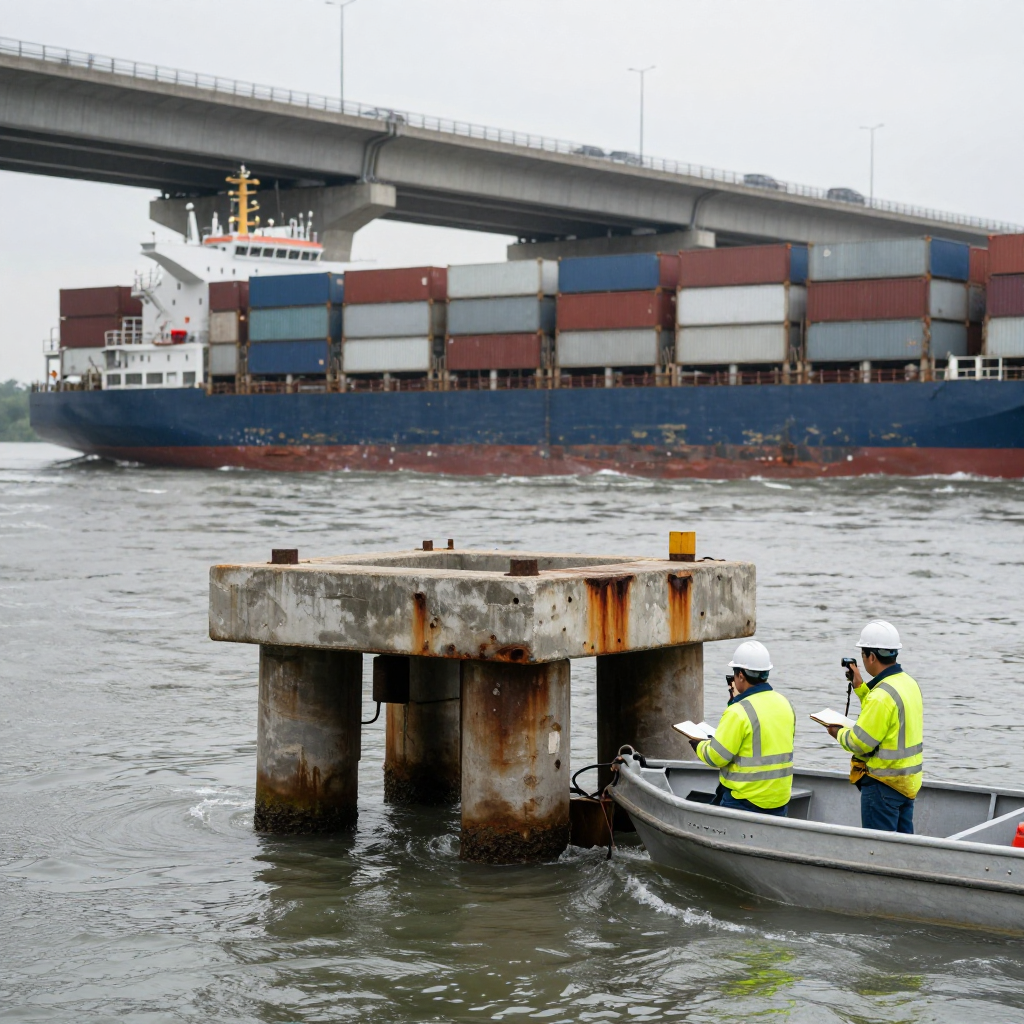
A single faulty wire on a cargo ship triggered a power failure that killed six construction workers and dropped the Francis Scott Key Bridge into the Patapsco River. That was not an unavoidable accident. It was a mechanical breakdown compounded by missed safety steps, and it exposed a national infrastructure blind spot that federal investigators are only now mapping out.
One year after the collapse, the National Transportation Safety Board reports that 68 bridges across the country require urgent assessment for ship strike vulnerability. The Maryland Transportation Authority never completed a recommended evaluation that would have flagged the danger. Meanwhile, the Singaporean shipping company behind the disaster agreed to pay roughly 102 million dollars to settle claims that maintenance shortcuts directly caused the crash.
These numbers read like bureaucratic bullet points until you consider who actually lives with the fallout. Working families rely on these crossings to commute to factory shifts, haul freight to distribution centers, and keep local economies moving. When state agencies skip vulnerability studies and corporate managers trim maintenance budgets, the corporate savings stay on balance sheets while the physical risk transfers directly to the people driving over the spans every morning.
The settlement does not rebuild a bridge, and it certainly does not fund the inspections that should have happened years ago. Working taxpayers are already watching national debt climb past gross domestic product while mandatory interest payments drain federal coffers. Asking everyday workers to shoulder delayed commutes, inflated shipping costs, and crumbling transit routes because leadership deferred routine safety checks is a reckless bargain that leaves families exposed.
The federal government has finally ordered a review of nearly 70 spans, but paperwork does not stop steel from buckling or keep vessels from drifting. Until inspection schedules are enforced and maintenance budgets are treated as nonnegotiable rather than optional, the working class will keep paying for decisions made in distant boardrooms and state offices. Who will actually cover the bill when the next span goes down?.
Leave a Reply